Ground Shaped to Control Water
Land Grading Services in Jonesborough for drainage correction and construction site leveling
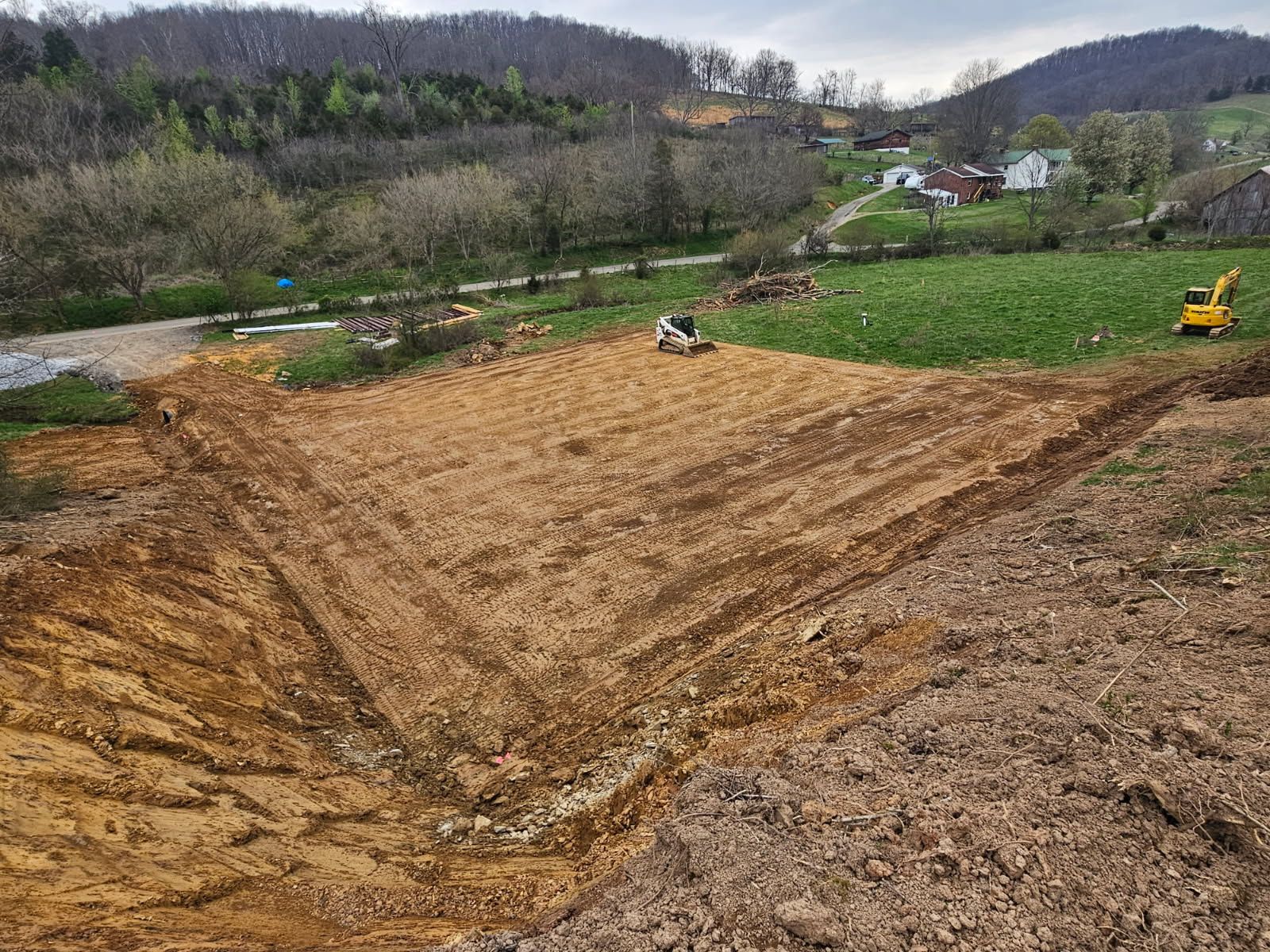
Water pools near foundations, driveways slope toward buildings instead of away, and uneven yard sections prevent mowing or equipment access. Land grading corrects these problems by reshaping ground surfaces to direct water flow, eliminate low spots, and establish consistent slopes that support construction or property use. RichCo Excavating provides rough grading for building pads, finish grading for driveways and yards, and slope correction for residential, agricultural, and commercial properties throughout Northeast Tennessee. Proper grading prevents foundation water intrusion, eliminates standing water zones, and creates level surfaces that support structures without settlement risk.
Grading services include establishing building pad elevations for new construction, resloping yards to correct drainage failures, leveling driveway approaches, shaping roadbeds for rural access routes, and contouring agricultural fields to manage runoff. Rough grading moves significant dirt volume to establish major elevation changes and primary drainage flow. Finish grading refines surfaces to final specifications, preparing ground for concrete, asphalt, landscaping, or structure placement. Northeast Tennessee properties often require grading adjustments to address clay soil expansion, rocky subgrade conditions, and slope transitions that affect water management and construction stability.
Arrange an on-site consultation to evaluate drainage patterns and grading requirements for your property.
Effective grading creates slopes between one and five percent that move water away from structures without causing erosion or channel formation. Equipment operators establish these slopes by cutting high zones, filling low areas, and compacting material in controlled lifts that prevent future settling. Grade adjustments redirect water toward drainage swales, culverts, or natural runoff paths that carry flow off the property without pooling or saturating foundation zones.
Once grading work finishes, you notice water flowing away from buildings during rain events, eliminated mud zones in previously low yard sections, and level surfaces that allow vehicle access or equipment operation without high-centering. Driveways and roads maintain crown slope that sheds water to edges rather than collecting runoff in wheel tracks. Building pads sit above surrounding grade, preventing water migration toward foundations and reducing moisture-related structure problems over time.
Grading projects for new construction typically include building pad preparation at specified elevation, access road shaping with proper drainage slope, and perimeter grading that directs water toward designated discharge points. Corrective grading for existing properties addresses specific drainage failures, eliminates problem low spots, and adjusts slopes without disturbing established landscaping or hardscape features outside the work area. Finish grading prepares surfaces for seed, sod, gravel, or paving by creating smooth, uniformly sloped ground free of ruts, ridges, or uncompacted fill zones.
What Homeowners Usually Ask
Grading questions often focus on drainage solutions, project extent, and how ground shaping affects existing site features.
What slope percentage prevents water pooling without causing erosion?
Residential grading typically uses two to three percent slope—steep enough to move water consistently but gentle enough to prevent soil washing during heavy rain events common in Jonesborough.
How does grading affect existing landscaping or utilities?
Finish grading occurs within specified work zones and avoids established trees, utility lines, or hardscape features outside the project area—rough grading for new construction may clear the entire site, while corrective grading targets problem zones without disturbing adjacent areas.
When should grading happen relative to other site work?
Rough grading follows clearing and precedes utility installation, allowing crews to establish proper elevations before underground work—finish grading occurs after utilities are buried and before final surfaces like concrete, asphalt, or landscaping are placed.
What site conditions affect grading complexity?
Rocky soil requires additional equipment time for material processing, high water tables may need temporary drainage during work, and significant elevation changes increase material handling and compaction requirements that extend project duration.
What distinguishes rough grading from finish grading?
Rough grading establishes major slopes and moves large dirt volumes to create building pads or correct severe drainage problems, while finish grading refines surfaces to final elevations within one inch of specifications, preparing ground for immediate construction or landscaping.
RichCo Excavating combines equipment capabilities with local terrain knowledge to deliver grading solutions that address drainage failures and prepare sites for construction. Request a grading estimate based on your property conditions and project objectives.