Property Protection Through Water Control
Environmental and Water Management in Jonesborough for properties facing stormwater runoff and erosion risk
Sloped terrain across Northeast Tennessee channels rainwater in ways that threaten foundations, driveways, and landscaping when natural drainage patterns are altered by development or land use changes. RichCo Excavating provides environmental and water management services in Jonesborough that address how water moves across your property before it causes structural damage or soil loss. Excavation strategies that account for seasonal rainfall patterns and local soil composition prevent recurring water problems rather than temporarily redirecting them.
This service involves analyzing existing water flow, identifying collection points where runoff concentrates, and reshaping terrain to guide stormwater away from vulnerable areas. Retention areas slow water velocity during heavy rainfall events, while grading adjustments create controlled pathways that prevent erosion channels from forming across exposed soil. Environmental grading preserves existing vegetation where possible and stabilizes disturbed areas to maintain long-term land integrity.
Schedule a property evaluation to identify specific drainage concerns and water flow patterns affecting your land.
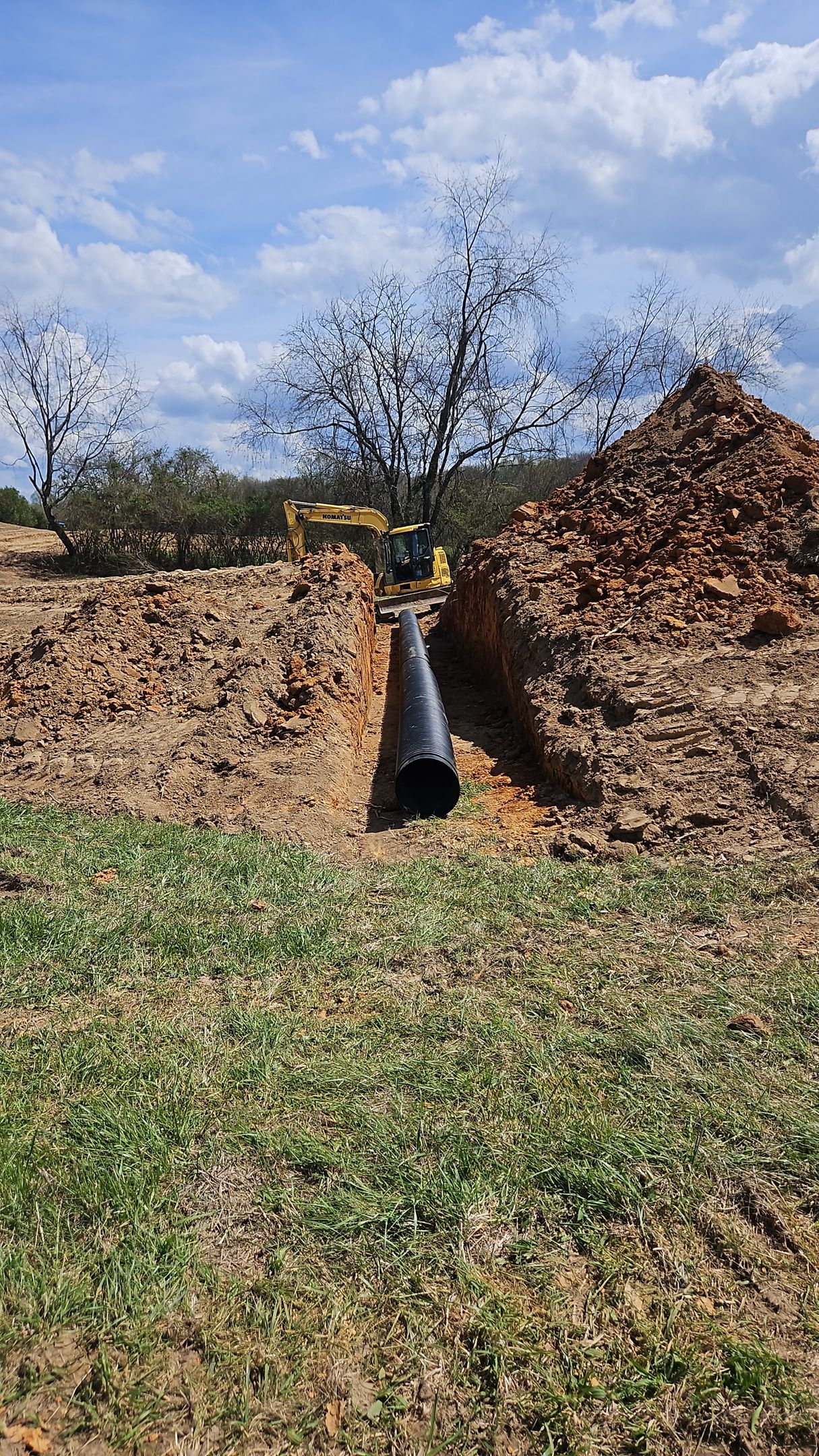
Correcting water runoff issues requires removing soil in strategic locations to create swales or retention basins, then compacting fill material to establish stable grades that direct flow predictably. Pond excavation serves dual purposes when designed correctly—storing excess stormwater during peak rainfall while providing water resources during dry periods. The depth and slope of retention areas determine whether water infiltrates gradually or simply holds until evaporation occurs.
After grading and excavation work is completed, water no longer pools against foundation walls or cuts erosion channels through driveways and access roads. Properties with corrected drainage show visible differences during the first significant rain event—water moves along designed pathways instead of seeking the lowest point indiscriminately. Land stabilization measures prevent the loose soil characteristic of fresh excavation from washing away before vegetation can establish root systems that hold terrain in place.
Environmental considerations guide equipment selection and excavation timing to minimize impact on surrounding ecosystems. Projects scheduled during dry months reduce soil compaction from heavy machinery, while phased approaches allow sections of land to stabilize before adjacent areas are disturbed. The goal is reshaping terrain in ways that work with natural water cycles rather than requiring ongoing maintenance to function properly.
Questions Before Starting Your Project
Property owners throughout Northeast Tennessee face similar challenges with stormwater management and terrain that channels water unpredictably during heavy rainfall.
What causes water to pool in specific areas of a property?
Soil compaction, grade reversals, and obstructed natural drainage pathways force water to accumulate where it cannot infiltrate or flow away naturally, often where previous construction altered original terrain contours.
How does pond excavation differ from simple retention basins?
Ponds are excavated deeper with varied depth zones to support aquatic ecosystems and provide permanent water storage, while retention basins are graded shallower specifically to hold stormwater temporarily during rainfall events then drain or infiltrate within 24 to 48 hours.
When should erosion control measures be installed during excavation projects?
Stabilization measures are implemented immediately after final grading is completed, since exposed soil begins eroding with the first rainfall—delaying erosion control by even one weather event can undo weeks of grading work.
What terrain conditions in Jonesborough require specialized water management approaches?
Properties with clay-heavy soil common throughout this region experience slower water infiltration rates, requiring larger retention areas and longer swales to handle the same runoff volume compared to sandy or loamy soil types.
How do you prevent new drainage solutions from simply moving water problems to a different location?
Comprehensive site analysis identifies where water ultimately needs to discharge—whether into existing drainage infrastructure, natural waterways, or designed infiltration areas—so redirected flow has a sustainable endpoint rather than concentrating problems downstream.
RichCo Excavating addresses water management challenges with excavation methods suited to Northeast Tennessee terrain and rainfall patterns. Request a consultation to assess drainage issues and land stabilization needs specific to your property.