Grading That Supports Long-Term Road Stability
Infrastructure and Roadwork in Jonesborough for access route development, roadway grading, and large-scale earthmoving projects
Roads that lack proper base preparation develop ruts, potholes, and washouts within months of construction, requiring repeated maintenance that disrupts access and increases long-term costs. RichCo Excavating handles grading and excavation for roads, access routes, and infrastructure projects in Jonesborough, preparing subgrades that support traffic loads and manage water to prevent pavement failure. This service applies when developing gravel roads for commercial properties, grading access routes to construction sites, or preparing roadbeds for paving contractors working on infrastructure expansion projects.
The process involves removing unsuitable soil, establishing proper cross-slopes and longitudinal grades that drain water off the roadway, and compacting subgrade material to densities that prevent rutting under wheel loads. Drainage structures such as culverts and ditches are integrated into the grading plan to intercept runoff before it undermines road surfaces. Heavy earthmoving equipment redistributes material to achieve engineered elevations, and coordination with contractors ensures grading aligns with project timelines for utility installation and paving operations.
Request a project consultation to discuss roadway grading requirements and equipment capabilities for your infrastructure development.
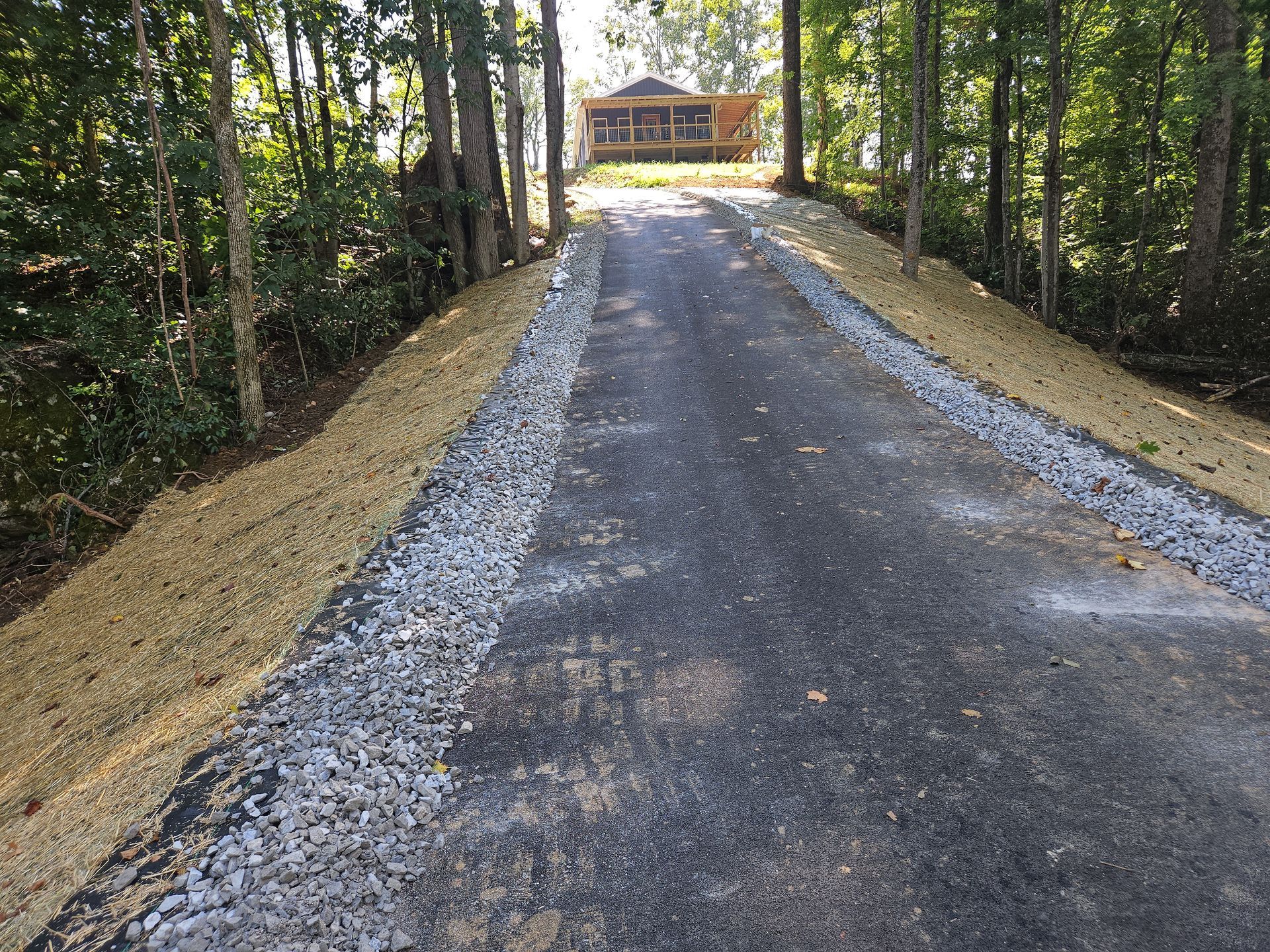
Roadway grading creates a stable platform by removing organic material, loose fill, and high-plasticity soils that deform under traffic loads. Subgrade is excavated to specified depths and replaced with granular base material that distributes weight across a broader area, preventing concentrated stresses that cause pavement cracking. Cross-slopes are graded to shed water toward ditches or collection systems, preventing saturation that weakens the base and accelerates deterioration. Longitudinal grades follow terrain while maintaining slopes gentle enough for vehicle traffic and steep enough to prevent water from ponding on the roadway surface.
Once grading is complete, the roadway presents a uniform surface at the correct elevation, with drainage structures positioned to handle stormwater without eroding adjacent areas. Compacted subgrade supports anticipated traffic volumes without rutting, and ditches remain clear of sediment that would obstruct flow and cause water to back up onto the road. The prepared roadbed is ready for gravel surfacing or asphalt paving, depending on project specifications.
Infrastructure grading includes clearing, subgrade excavation, base material placement, drainage structure installation, and final grading to specified elevations. It does not include paving, striping, or signage installation, which are completed by paving contractors following subgrade approval and inspection.
Questions Before Starting Your Project
Contractors and developers frequently ask about grading processes, drainage solutions, and equipment capabilities before beginning roadwork projects.
What determines the depth of excavation for roadway grading?
Soil bearing capacity and anticipated traffic loads determine how much unsuitable material must be removed and replaced with engineered base. Geotechnical testing identifies weak soils that require deeper excavation to achieve stable subgrade conditions.
How does drainage in Jonesborough affect road design?
Regional rainfall intensities require ditches and culverts sized to handle peak flows without overtopping. Clay soils drain slowly, making proper cross-slopes essential to move water off pavement before it infiltrates and weakens the base.
What equipment is used for large-scale roadwork grading?
Motor graders establish precise surface elevations, bulldozers move material during mass excavation, and articulated dump trucks haul unsuitable soil off-site or import base material. Compaction equipment includes smooth-drum rollers and pneumatic tire rollers depending on material type.
When should infrastructure grading be scheduled?
Grading during dry periods allows equipment to operate efficiently and prevents soil compaction issues caused by working wet material. Scheduling around wet seasons reduces delays and maintains subgrade quality.
How is compaction verified during roadway grading?
Compaction testing measures soil density at specified intervals to confirm it meets engineering standards. Subgrade that fails testing is reworked and retested before base material is placed.
RichCo Excavating supports infrastructure and roadwork projects throughout Jonesborough with heavy equipment capabilities and contractor coordination experience. Reach out to discuss your grading needs and schedule an estimate for your project.